


History of Stapleford Flight Centre
Before World War II
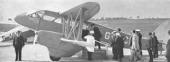
Stapleford opened in 1933 as an operating base for Hillman Airways - a charter company formed three years earlier by businessman Edward Hillman. In April 1933 he started a schedule service to Paris, France using his newly acquired Dragon Rapides, the return fare was £5.10s.0d. Stapleford was known in those days as Essex Aerodrome.
After two years of air service covering most of Europe, Hillman ran into financial difficulties and was taken over by Whitehall Security Corporation Ltd. With three other airlines that they owned, they formed British Airways Ltd. and commenced operations in 1936. After four months operations all flights were transferred to Heston Aerodrome and Stapleford was left empty apart from a few private aircraft.
The war years
The RAF first showed an interest in Stapleford Tawney in 1937. No 21 Elementary and Reserve Flying Training school was established at Stapleford in 1938. Flying training was conducted under contract to the Ministry by Reid and Signist Ltd. One of the schools famous (if not the most famous pupil) was J.E. "Johnnie" Johnson who became the RAF's top scoring pilot and retired from the RAF in 1966 with the rank of Air Vice Marshall.
Johnson, who lived in Loughton near Stapleford, worked as a civil engineer and went to Stapleford Tawney at the weekends for his flying training. His training was on Tiger Moths and he remembered his instructor warning him to "keep a good lookout for Hurricanes out of North Weald, they come at you at high speed and look no bigger than a razor blade".
Shortly after the outbreak of war the airfield was requisitioned, some improvement work was carried out, a long perimeter track and dispersal points were laid down plus a few accommodation buildings were also erected. Being a grass field some pilots complained it was too rough; with severe ruts running across the runways. By the end of March 1940 the airfield was considered ready to become a satellite station for North Weald.
No 151 Squadron was the first to use Stapleford on a regular basis. It started patrols towards the end of August. During its short stay the squadron lost six aircraft and two pilots. One of them was squadron leader Eric King who was killed in action on the 30th of August. 151 squadron moved to Digby in Lincolnshire for a much-needed rest. The squadron was dogged by ill-luck. On the 4th September Pilot Officer Richard Ambrose was killed when his aircraft struck a crane on take off for Digby and burst into flames. P.O. Ambrose is buried in Epping cemetery.
No.46 Squadron
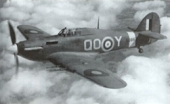
The replacement squadron at Stapleford was No 46 Sq, an experienced squadron. In April of 1940 it had been sent to Norway and after some bitter air-fighting was ordered back to England in June. The pilots of 46 squadron took their Hurricanes and landed them on the aircraft carrier HMS Glorious, no mean feat considering none of the pilots had any carrier deck landing practice. Sadly HMS Glorious was sunk on the way back, all the aircraft were lost and only two of the pilots survived the sinking being rescued after three days afloat.
Straight into action
Pilots of 46 Sq. went straight into action, claiming their first victory on the 2nd September when a Me 109 was destroyed for the loss of one pilot. On the following day when North weald suffered its heavy attack, the squadron lost five aircraft whilst accounting for two enemy bombers.
The next day three more Hurricanes were lost and, by a quirk of fate, one of the pilots, Pilot Officer Charles Ambrose, was shot down near Rochford almost at the same time as Po Richard Ambrose was killed at Stapleford. P.O. Ambrose had to bail out again in November but he survived the war retiring in 1972 with the rank of Group Captain CBE, DFC, AFC.
Victories
During the month the Squadron claimed nineteen victories for the loss of twenty aircraft. Unfortunately eight pilots were killed in action. The weather in the first two weeks of October was for the most part poor. As a consequence things were quieter. Yet by the end of October the Squadron had lost a further nine Hurricanes and four more experienced pilots. By November 8th the weather had taken its toll of the airfield. It was declared unserviceable and 46 Squadron moved back to North Weald. Flying ceased at Stapleford until the spring of 1941.
Top secrets
During August of 1941 a highly-secret unit moved into North Weald. Its personnel kept themselves well apart from the rest of the station. The unit was numbered 49 Flight and was under the command of Flt Lt Walter Farley; an experienced pilot well suited to the clandestine and dangerous work of this flight.
It had been officially formed on 21st August as the operational air-arm of the SOE (Special Operations Executive) which was largely the brain child of a Dr Hugh Dalton, the Minister for Economic Warfare who intended the SOE should undertake irregular warfare, including industrial and military sabotage.
The flight would use Armstrong Whitworth Whitleys to drop agents and the necessary supplies behind enemy lines, Westland Lysanders would be used to pick up agents as well as other important people. The attention the Luftwaffe paid North Weald resulted in the flight moving to Stapleford on 4th September. According to one of the pilots there, they lived in bell tents and washed in a little stream (the River Roding) near the airfield. Eventually being bombed out of their tents they moved in to some nearby farm buildings.
The Whitley was a rather large aircraft to use Stapleford's grass runways. Only two operations were carried out from Stapleford; one to Brest and the other to Fontainebleau. The flight then moved to Stradishall in Suffolk on 9th October.
"The third shall be the first"
The airfield was not used operationally until 9th April when Hurricanes of 242 Squadron flew in from Martlesham Heath. The squadron was in the hands of Sq Ldr W. Paddy Treacy. On the squadron's first operation out of Stapleford (20th April) three Hurricanes collided in cloud over the Channel all three pilots were killed one of which was Sq Ldr Treacy. Three days later the new C.O. of 242 arrived Willard Whitney-Straight. Born into a wealthy American family, he was one of the most colourful characters of Fighter Command. A pre-war racing driver he even owned his own airline; retiring from the RAF with the rank of Air Commodore.
Whilst at Stapleford the Squadron flew mainly offensive sweeps over northern France and Holland, moving to North Weald in the end of May. Late June saw the arrival of the next Hurricanes. The Mark 11s of No 3 Squadron (motto "The third shall be the first") was the oldest squadron in the RAF having been formed in May 1912. Whilst at Stapleford the pilots had been practising night flying from nearby Hunsdon. The squadron shared Stapleford with Airspeed Oxfords and Tiger Moths of No 2 Camouflage Unit. The unit was responsible for all the aerial examination of all the camouflaged sites and installations in East Anglia.
Towards the end of 1941 a new Air Sea Rescue squadron was formed at Stapleford - No 277. This collection of flights that had previously been operating separately from a number of fighter airfields in No 11 Group. Stapleford became the squadrons headquarters for the next year without any operational flying taking place from the airfield. The building the squadron used as its Headquarters was sited at Dudbrook Hall near Kelvedon Hatch, the building is now a private nursing home.
Victories
March 1943 saw Stapleford being taken out of Fighter Command and placed under the command of No. 34 Wing of the Army Co-operation Command, becoming a satellite of Sawbridgeworth. The only Army Co-op unit to use the airfield was No 656, which arrived from Westley, near Bury St Edmonds, Suffolk. These squadrons were known as OAP and were equipped with Taylorcraft Austers.
The Army Co-operation Command was disbanded on 1st June and by August the Auster squadron had departed for Liverpool and then on to India. Stapleford was used for the build up for the invasion of Europe and saw the arrival of a number of units. On 20th November a V2 rocket landed in the middle of the airfield leaving a crater 60 feet in diameter. Then again on 23rd February 1945 another rocket landed on the airfield camp site unfortunately killing 17 personnel and injuring 50 others. A number of the personnel are buried in the church cemetery at North Weald. Stapleford finished its wartime service with the last personnel leaving before VE day.
Since the war
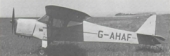
In 1953 Roger and Buster Frogley transferred the Herts and Essex Aero club from Broxbourne in Hertfordshire to Stapleford Tawney, the hangars were renovated and they began flying Tiger Moths and Austers. In 1955 Edgar Percival the famous pre-war aircraft designer, set up a company at Stapleford under his name and started a production line for his EP9 crop spraying aircraft, a total of 40 aircraft were built.
Although still owned by Herts and Essex, Stapleford Flying Club is now operated by Mr. John Chicken and his daughter Pamela, Stapleford Flying Club remains one of the few family-run flying clubs in the UK.
Tweet

Quick Links
Pilot Training
Courses

Pilot Training
Pricelist

Pilot Training
Open Day

Student
Facilities

Book a
Trial Lesson


Travel
Information

SFC Student
Resources


Aircraft Servicing,
Parts & Hangarage

Jobs &
Careers

Contact
Us

Our Training Facilities
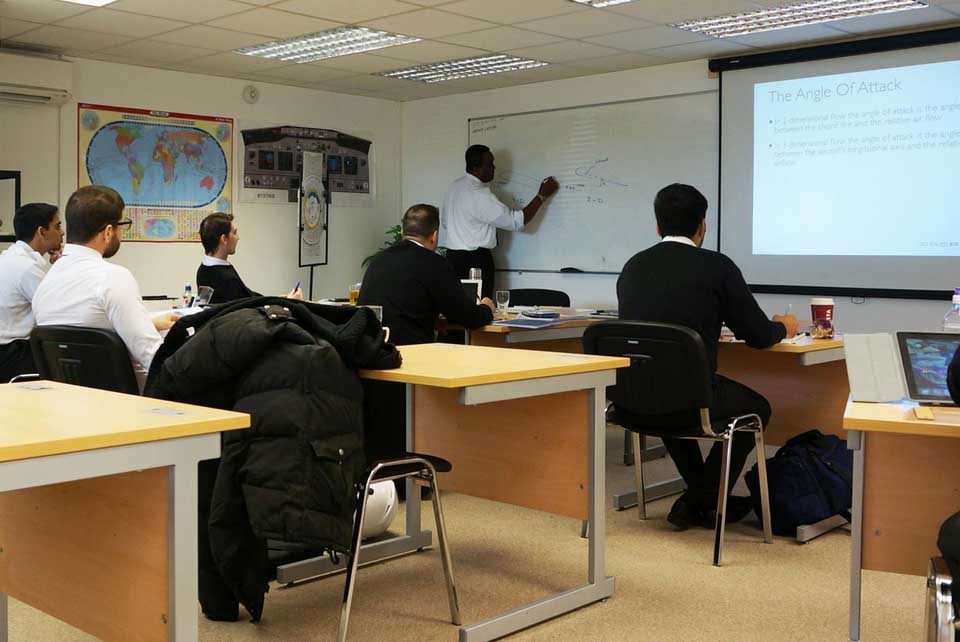
Modern Classroom Facilities
State-of-the-Art Jet & Prop Simulators

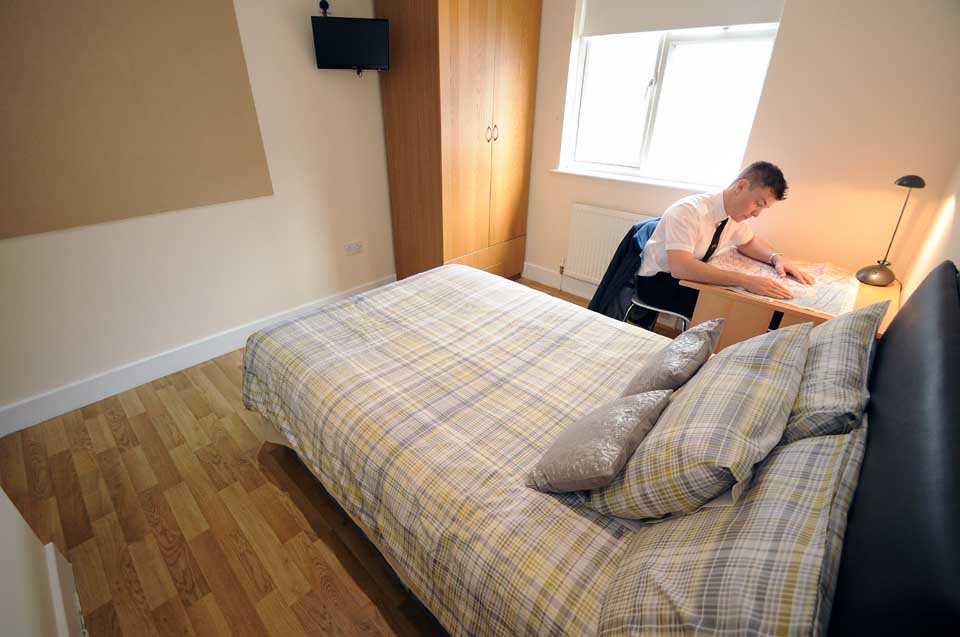
Comfortable Student Accommodation
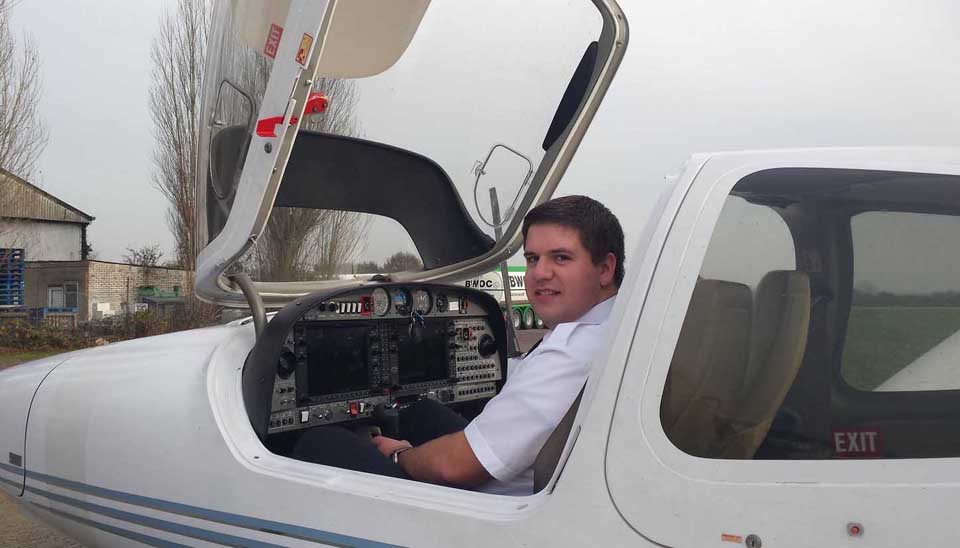
World-Class Training Aircraft
Latest News & Weather!
Latest Newsletter from SFC!
Our FREE quarterly newsletter 'Take Off' (PDF - 274kb) is now available to download (requires Acrobat Reader). It contains lots of up-to-the-minute news about the airfield and club as well as all the latest gossip. We want your contributions too. So if you have any stories, anecdotes or other ideas you wish to add to the next newsletter, or if you wish wish to order a FREE copy, please contact our editor Sue Rose - ku.oc.liamtoh@rp.esoreus or call her on 07808 587248.

Sept 2018 - Stapleford Flight Centre gets approval for Airline Pilot Standard MCC Courses
Stapleford Flight Centre are delighted to offer the new industry-standard MCC, known as the 'APS MCC' or 'Airline Pilot Standard Multi-Crew Co-operation Course'. The course syllabus is extended with ground school element increasing from three to five days with additional subjects; TEM (threat error management) CRM (crew resource management) FTL (flight time limitations) Swept wing theory Upset recovery and prevention SMS (safety management systems) ... read more here >>
2018 - Proposed RNAV approach at SFC - Consultation Process
This consultation is in relation to our proposed airspace change to allow RNAV approaches onto Runway 21L. You can download the PDF response form or add your responses online. You can also book into the 'drop -in' sessions here.
Latest Airfield Weather & Flying Status at SFC (Click to view in full window)
(Click to open in FULL separate window)
Latest Tweets from SFC!
Tweets by @flysfcSept 2015 - Stapleford Launches Integrated Pilot Training Courses!
Following hot on the heels of the Civil Aviation Authority (CAA) approval for Stapleford Flight Centre’s modular Air Transport Pilots’ Licence (ATPL) Theoretical Knowledge courses, Stapleford has now been given the go-ahead to run Integrated Pilot Training Courses at the airfield near Romford in Essex.... Download full press release >>
Aug 2015 - ATPL Theory Courses Cleared for Solo Take Off!
The Civil Aviation Authority has granted stand-alone approval for Stapleford Flight Centre to run modular Air Transport Pilots’ Licence (ATPL) Theoretical Knowledge courses at the airfield near Romford in Essex. This is the only ATPL theory course inside the M25 in the London area.. Download full press release >>
24th March 2015 - Re: Southend Controlled Airspace
When requesting a clearance into the new Southend CAS, from April 2nd 2015, it would be advisable to quote the CTA number(s) that you want clearance into. Sadly the CTA numbers are not shown on the new 1:500,000 chart and so you will find this chart useful. We strongly suggest that you carry it with you when flying locally to help you ensure you get the clearance you want. If you have any questions or concerns please contact one of the instructors at Stapleford: 01708 688380.
Latest Airline Industry News!
See:
New SFC 'Mobile Friendly' Website Launches!
Stapleford Flight Centre launches new 'mobile-friendly' website. We hope you like it - and that it displays consistently well on your desktop, laptop, tablet or mobile device (and if not, please do let us know and we'll try our very best to fix it).

SFC first with ALX medium jet simulator!
Stapleford Flight Centre, one of the UK’s top flight training schools, is leading the field with the acquisition of a brand new “state of the art” ALX Alsim medium jet simulator. This is first in the UK, and one of only five in Europe. It has just been installed at the Essex-based airfield and it will be used for MCC (Multi-Crew Co-operation) courses and JOC (Jet Orientation Courses) as well as a combined course for tomorrow’s airline pilots.
SFC Partners with ProPilot!
In conjunction with ProPilot we are introducing an enhanced ab-initio course where, in addition to the standard Zero to Frozen ATPL elements, we will train for type-rating preparation.

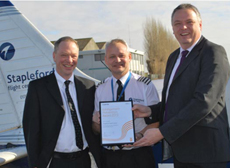
SFC awarded Infringement Prevention Award from NATS!
The first-ever National Air Traffic Service (NATS) Infringement Prevention Award has been awarded to Stapleford Flight Centre. This is a result of the sustained campaign led by Deputy Head of Training, Brian Peppercorn.
SFC Gains BAC Accreditation!
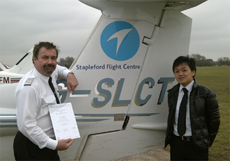
Stapleford Flight Centre, internationally-renowned flight training school for private and commercial pilots, has been awarded Full Accredition for its training courses by the British Accreditation Council for Independent, Further and Higher Education.
Tweet
Location Map
Contact Us